
Tips For Staying Focused Without Burning Out
Most of us have experienced days when concentrating feels almost impossible. You sit down to work, but your mind keeps wandering. You reread the same email three times. By the end of the day, you're exhausted, even if you don't feel like you've accomplished much. It's easy to assume the answer is to push harder. In reality, that's often what leads to burnout.

Can You Improve Memory Naturally?
Everyone forgets things from time to time, whether it's where you put your phone, an upcoming appointment, or someone's name. Occasional forgetfulness is a normal part of life. The good news is that memory isn't fixed. Your brain has the ability to strengthen many of its memory processes through healthy daily habits.
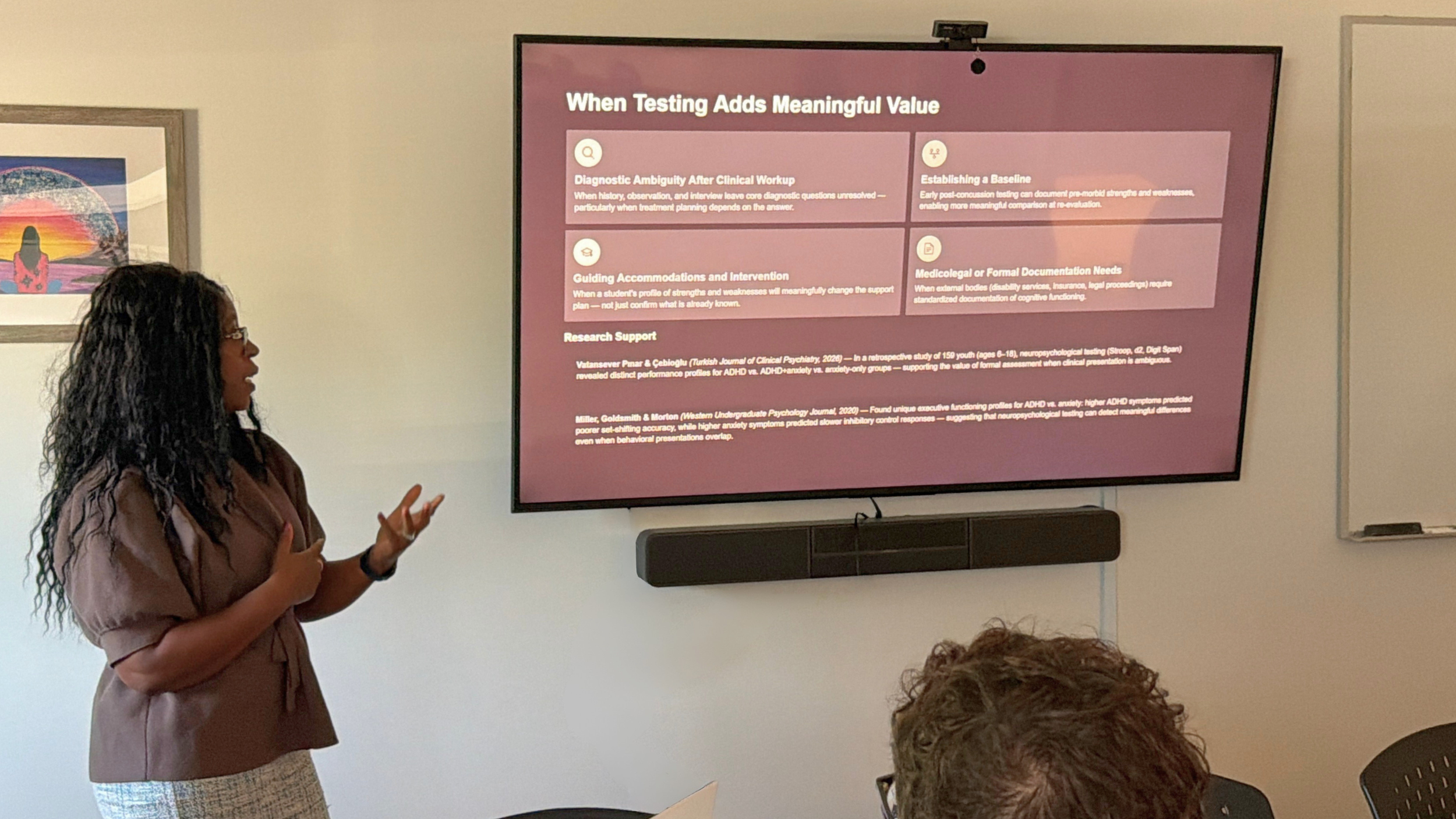
How Universities Can Better Support Students with ADHD, Anxiety, and Concussion: Insights from Dr. Nicole Murray's Presentation at Trent University
Dr. Nicole Murray recently presented to Trent University's Accessibility Services, Student Wellness, Counselling, and Health Promotion teams, sharing practical, evidence-based strategies to help professionals differentiate ADHD, anxiety, and post-concussion symptoms while supporting student success.

Can ADHD Be Misdiagnosed as Anxiety or Depression?
Many people who struggle with focus, motivation, overwhelm, or emotional ups and downs assume they are dealing with anxiety or depression. In some cases, that's true. But for others, the underlying issue may actually be Attention-Deficit/Hyperactivity Disorder (ADHD). Because ADHD, anxiety, and depression can share many symptoms, it is not uncommon for one condition to be mistaken for another. Understanding the differences can help people get the support and treatment that best fits their needs.

The Impact of Small Daily Habits In Workplace Wellness
When people think about workplace wellness, they often picture major initiatives like gym memberships, wellness programs, or company-wide health campaigns. While those efforts can be valuable, the reality is that workplace wellness is often shaped by much smaller actions that happen every day. The habits employees and leaders practice consistently can have a significant impact on energy, focus, stress levels, productivity, and overall well-being. In many cases, small daily changes are easier to maintain and can create lasting improvements over time.

The Science Behind Exercise and Better Brain Function
You don't have to wait months to experience the cognitive benefits of physical activity. Research shows that exercise can begin affecting brain function almost immediately, with both short-term and long-term benefits for memory, focus, mood, and overall cognitive health. If you've ever noticed that a walk helps you think more clearly or that you feel mentally refreshed after a workout, there's a scientific reason why.

The Impact Dementia has on Emotional Regulation
When most people think about dementia, memory loss is often the first symptom that comes to mind. However, dementia affects much more than a person's ability to remember names, dates, or events. One of the most significant yet often overlooked changes involves emotional regulation, the ability to recognize, manage, and respond to emotions appropriately. For individuals living with dementia and their loved ones, emotional changes can sometimes be more challenging than cognitive symptoms. Understanding why these changes occur can help families, caregivers, and healthcare professionals provide more effective support while fostering greater compassion and patience.

Healthy Ways to Process Stress and Protect Your Mental Health
Stress is part of being human. The goal is not to eliminate it. The goal is to process it in a way that helps your mind and body recover instead of staying stuck in a constant state of tension. Many people think they are managing stress because they are distracting themselves from it. Scrolling social media, binge-watching television, staying busy, or pushing through exhaustion can provide temporary relief. The problem is that stress often remains in the background, continuing to affect sleep, concentration, mood, and physical health. Processing stress means acknowledging it, understanding what is driving it, and giving your brain and body opportunities to recover.

What Does ADHD Look Like in Adults?
Many adults with ADHD do not fit the stereotype people often imagine. They may be successful at work, highly educated, organized in some areas of life, and capable of managing significant responsibilities. From the outside, they can appear productive and “high-functioning.” But internally, many are working much harder than others just to keep up.

Understanding Personality and Behaviour Changes After Brain Injury
When people think about brain injuries, they often picture physical symptoms such as headaches, dizziness, or memory problems. What is less commonly discussed is how a brain injury can also affect personality, emotions, behaviour, and relationships. For many individuals and families, these changes can be among the most difficult parts of recovery to understand and manage.

The Impact of Daily Movement on the Brain
If you think exercise is just about physical fitness, you’re missing half the story. Daily movement has a powerful, measurable impact on your brain. It shapes how you think, feel, and function every day. The best part? You don’t need intense workouts to see the benefits. Consistent, simple movement can create meaningful change.

What Does Sustainable Productivity Actually Look Like? (And Why Doing More Isn’t the Answer)
If you feel busy all day but still behind, you’re not alone. A lot of people are stuck in a cycle of pushing harder, working longer, and ending the day mentally drained. But here’s the shift most people miss: Sustainable productivity isn’t about doing more; it’s about doing what works for your brain, consistently.

How Self-Awareness Can Transform ADHD Management
If you’re living with Attention-Deficit/Hyperactivity Disorder, you’ve probably tried productivity hacks, apps, or strict routines, only to find they may not stick. That’s not a failure of effort. It’s often a mismatch between the strategy and how your brain actually works.
Self-awareness changes everything.

Early Signs of Cognitive Challenges and When to Seek Help
Cognitive health is something many people don’t think about until something feels off. Maybe it’s forgetting conversations, struggling to stay focused at work, or feeling mentally slower than usual. While occasional lapses are a normal part of life, persistent changes in memory, attention, or thinking skills can signal something more.

Cognitive Strategies for Better Decision-Making at Work
Every day at work, people make dozens, sometimes hundreds, of decisions. Some are small, like choosing how to prioritize emails. Others carry more weight, like hiring a new team member, approving a budget, or choosing a strategic direction.But decision-making is rarely as rational as we think. Our brains rely on shortcuts, past experiences, and emotional reactions to process information quickly. While these mental shortcuts can be helpful, they can also lead to errors in judgment.

Boosting Memory Naturally with Strategies that Work
We’ve all been there, walking into a room and forgetting why you went in, or blanking on a person's name two seconds after they introduced themselves. While we often joke about losing it, memory isn't just something you're born with; it’s a skill you can sharpen.

Tips for Students and Lifelong Learners
Whether you’re a high school student, a university learner, or someone picking up new skills later in life, learning isn’t just about intelligence or effort. It’s about how your brain takes in, stores, and retrieves information. The good news? Science gives us clear, practical ways to learn more effectively, at any age.

Daily Habits That Actually Protect Your Mind
Starting a conversation about brain health usually feels a bit heavy, like we’re waiting for something to go wrong before we pay attention to it. But your brain isn't just a "black box" that works until it doesn't. It’s more like a muscle; if you use it in the right ways and give it the right fuel, it actually gets more resilient.

Brain Fog vs. Cognitive Decline: What’s Normal and What’s Not?
Have you ever walked into a room and completely forgotten why you went there? Or maybe you’ve struggled to find a common word while telling a story?
For many of us, these moments trigger a sudden wave of panic: Is this just stress, or is it something more serious?
In a world that’s constantly "on," our brains take a lot of heat. Distinguishing between brain fog and cognitive decline is essential for your peace of mind and your long-term health.

5 Science-Backed Habits for Peak Cognitive Performance
Have you ever had one of those days where your brain feels like a browser with fifty tabs open, and half of them are frozen? We’ve all been there. Whether you’re studying for finals, trying to level up at work, or just want to feel sharper, brain fog is the ultimate enemy.
The good news? Your brain isn't a static hard drive; it’s more like a muscle. Through a process called neuroplasticity, you can actually rewire your brain to work faster and more efficiently.