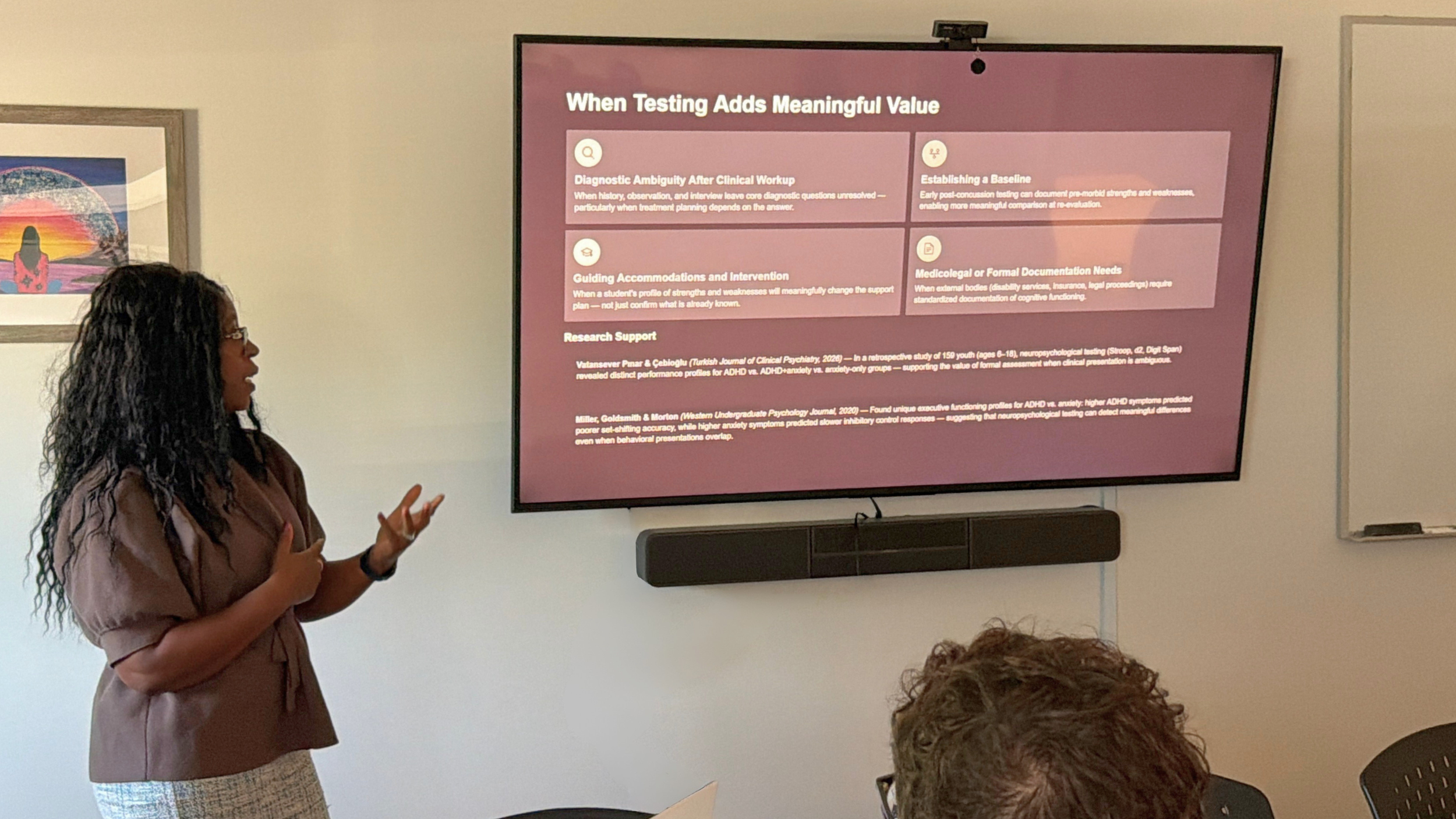
How Universities Can Better Support Students with ADHD, Anxiety, and Concussion: Insights from Dr. Nicole Murray's Presentation at Trent University
Dr. Nicole Murray recently presented to Trent University's Accessibility Services, Student Wellness, Counselling, and Health Promotion teams, sharing practical, evidence-based strategies to help professionals differentiate ADHD, anxiety, and post-concussion symptoms while supporting student success.

The Impact of Small Daily Habits In Workplace Wellness
When people think about workplace wellness, they often picture major initiatives like gym memberships, wellness programs, or company-wide health campaigns. While those efforts can be valuable, the reality is that workplace wellness is often shaped by much smaller actions that happen every day. The habits employees and leaders practice consistently can have a significant impact on energy, focus, stress levels, productivity, and overall well-being. In many cases, small daily changes are easier to maintain and can create lasting improvements over time.

Supporting Neurodiverse Employees: Practical Workplace Tips
Creating an inclusive workplace is more than a ‘trend’, it’s a responsibility. One important part of inclusion is supporting neurodiverse employees. Neurodiversity refers to the natural differences in how people think, learn, and process information. These differences are a normal part of human variation.

Why Sleep, Stress, and Focus Are Your Best Professional Assets
In the race to climb the career ladder, many of us fall into a common trap. We think that hustle means sacrificing sleep, ignoring stress, and multitasking our way through an endless to-do list.
But if you look at the top performers in any field, from neurosurgeons to CEOs, they aren't just working harder; they are working smarter by protecting their brain health.
To reach your full potential, you need to understand how sleep, stress, and focus work together to drive your career. Let’s break down the science behind this "Triple Threat" and how you can use it to your advantage.

Dementia Awareness: Supporting Loved Ones and Maintaining Brain Health
Every year, millions of families around the world are touched by dementia. Whether it’s a parent, grandparent, or close friend, seeing someone you love struggle with memory loss and cognitive decline can be deeply emotional. But with understanding, patience, and the right support, it’s possible to help your loved one live a meaningful life while also protecting your own brain health.

Emotional Resilience: Neuropsychology Tips for Coping with Life’s Challenges
Life is full of ups and downs, marked by stressful jobs, relationship struggles, health issues, and unexpected changes. While we can’t always control what happens, we can build the skills to handle challenges in healthier ways. This ability is called emotional resilience.