How Universities Can Better Support Students with ADHD, Anxiety, and Concussion: Insights from Dr. Nicole Murray's Presentation at Trent University
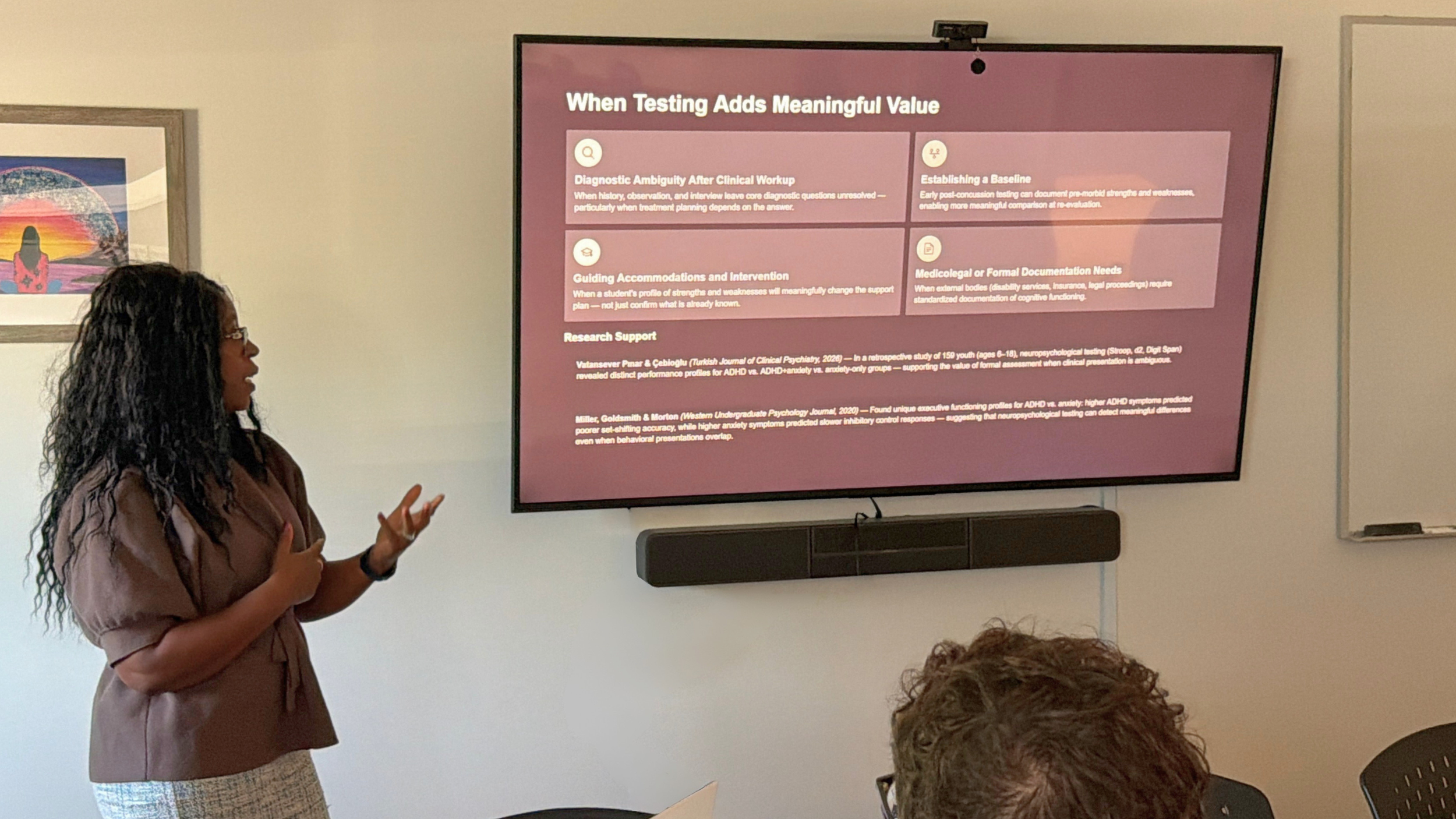
As more students seek support for attention difficulties, anxiety, concussion recovery, and academic challenges, university professionals are increasingly faced with a difficult question:
How do we differentiate between conditions that often present with many of the same symptoms?
While difficulties with attention, memory, organization, and concentration may appear similar on the surface, the underlying causes can be very different. Understanding those differences is essential for making appropriate referrals and providing meaningful support.
To help address this challenge, Dr. Nicole Murray, Clinical Neuropsychologist at the Durham Region Centre for Cognitive Health (DRCCH), was invited to present to Trent University's Accessibility Services, Student Wellness, Counselling, and Health Promotion teams.
The session focused on helping professionals better recognize the overlap between ADHD, anxiety, and post-concussion symptoms while providing practical, applicable strategies that could immediately be applied when supporting students.
Topics included:
Differentiating ADHD, anxiety, and post-concussion symptoms in real-world situations.
Understanding when neuropsychological assessment provides meaningful clinical value, and when it may not be necessary.
Practical frameworks for supporting students experiencing cognitive and academic challenges.
Current evidence surrounding concussion recovery, rehabilitation, and student success.
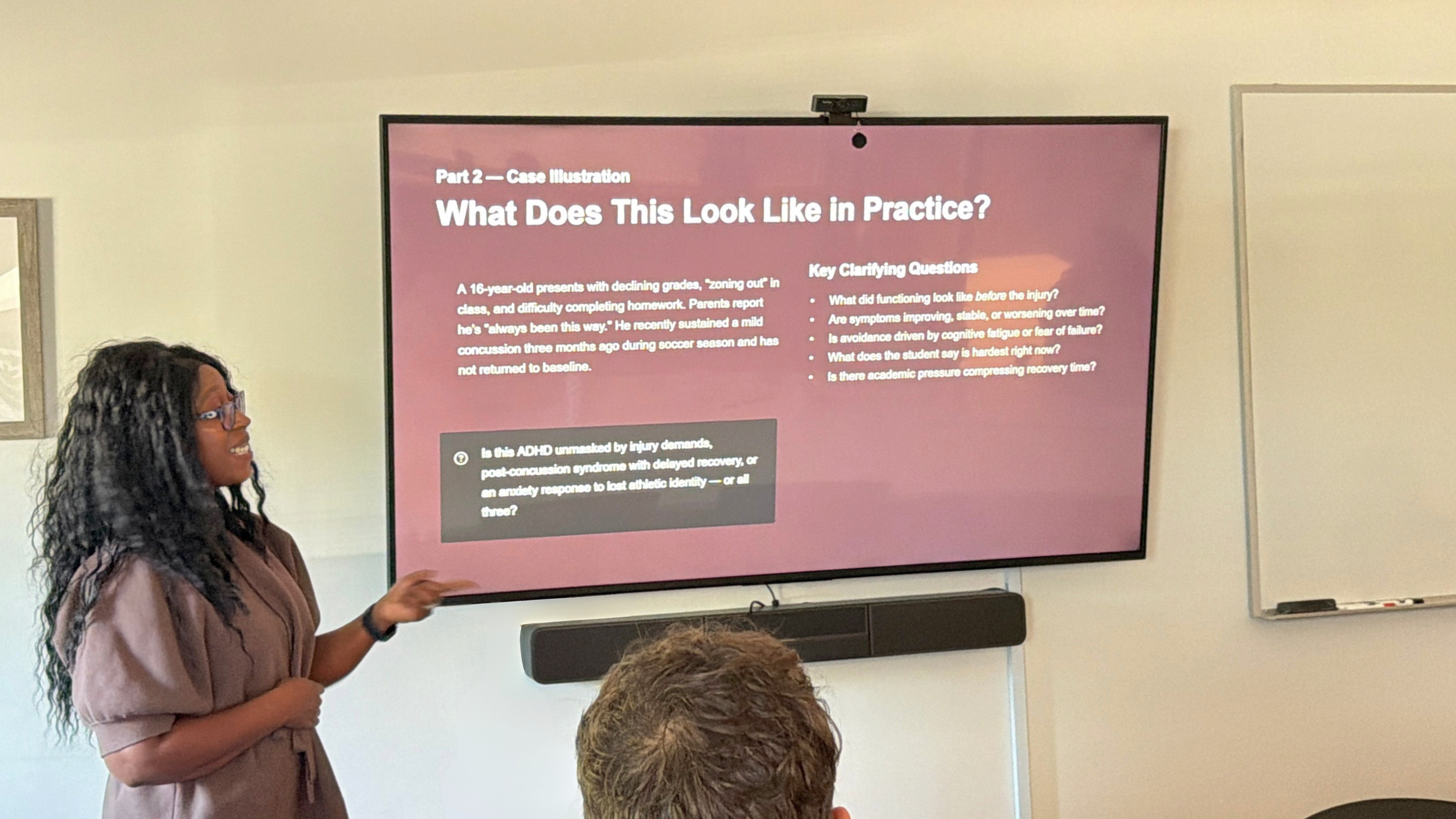
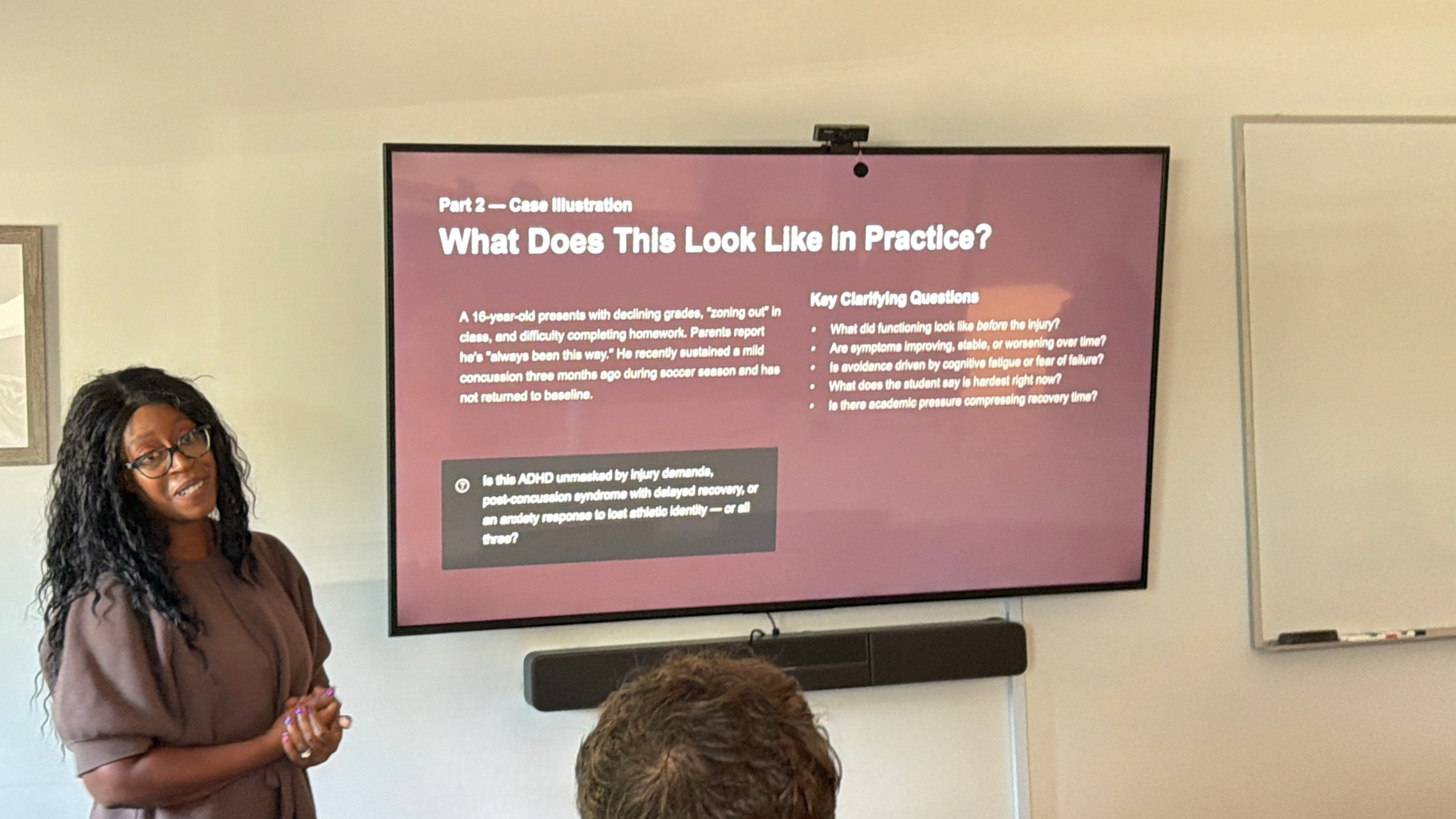
One of the primary goals of the presentation was to bridge the gap between clinical knowledge and day-to-day student support. Rather than focusing solely on diagnosis, the session emphasized understanding the individual behind the symptoms, recognizing clinical patterns, and helping professionals make informed referral decisions while continuing to support students throughout their academic journey.
The presentation provided an opportunity for a thoughtful discussion across departments and reinforced the importance of collaboration between healthcare providers and post-secondary institutions.
Following the session, attendees shared positive feedback about both the content and its practical application.
"Dr. Nicole is a wealth of knowledge, and (I am) very appreciative of the time she took to share this presentation with us."
Anonymous participant feedback from the Trent University presentation
"I really appreciated the thoroughness of her presentation, specifically her detail with going into the overlap of ADHD, anxiety and post-concussion symptoms and the slight differences to look out for. It was very helpful to learn more about post-concussion symptoms, more realistically the healing time, the importance of rehabilitation therapy and where we can send these folks looking for further direction and support."
Anonymous participant feedback from the Trent University presentation
"Thank you for your insightful presentation, particularly your discussion of cue sheets and post-concussion recovery. It was both informative and highly valuable. Learning that recovery after one year may be slower rather than stopped is especially helpful, as it allows me to better normalize students' experiences and reassure them that the impacts are not necessarily permanent."
Anonymous participant feedback from the Trent University presentation
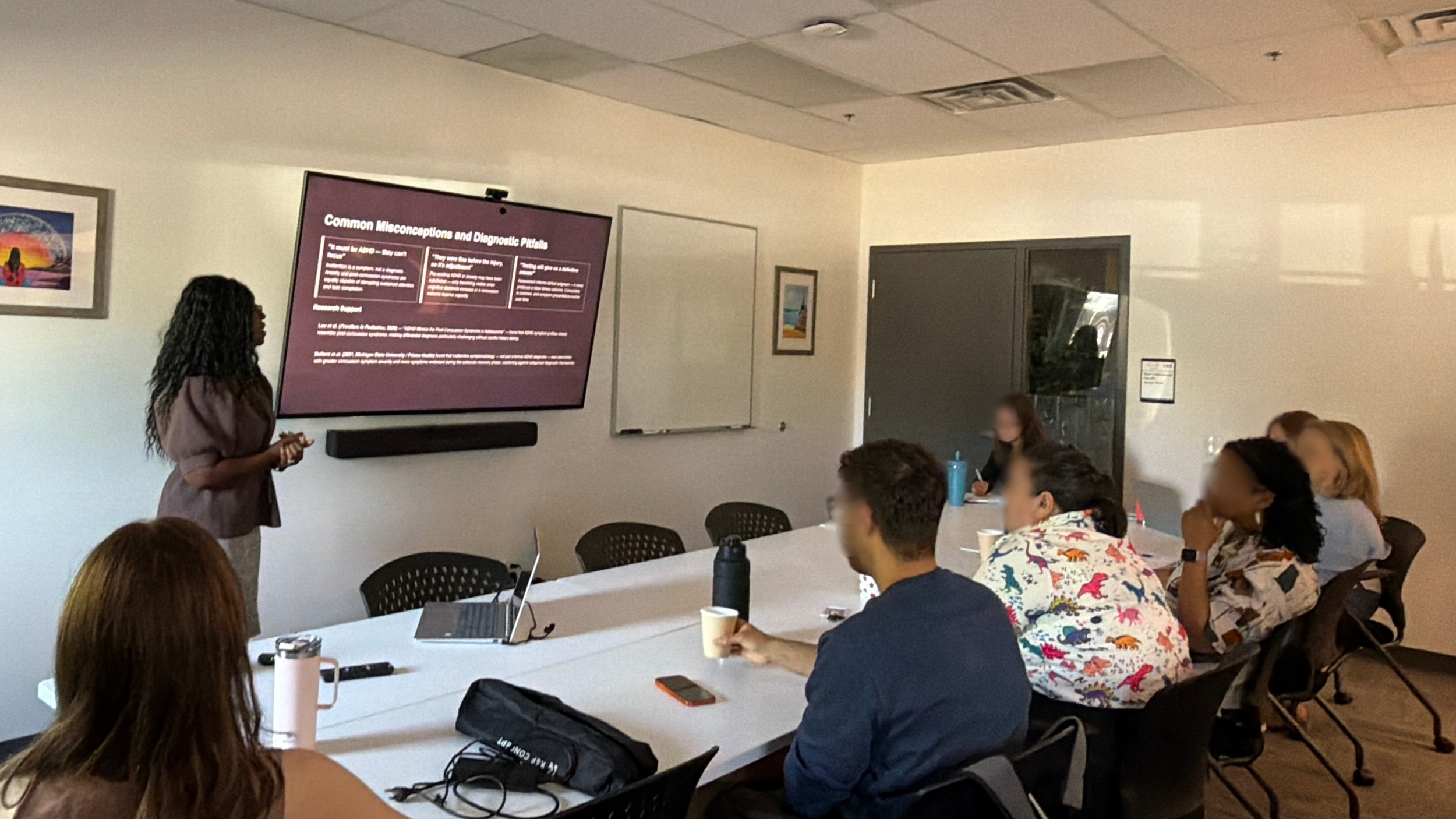
Professional education has always been an important part of Dr. Murray's career. In addition to providing comprehensive neuropsychological assessments at the Durham Region Centre for Cognitive Health, she has served as an Adjunct Faculty member at the Mount Sinai Icahn School of Medicine in New York City for the past seven years, teaching neuropsychology interns in the same advanced training program where she completed her own specialized training.
She regularly presents to healthcare professionals, educators, and community organizations throughout North America, and will also be presenting this fall at AfroTech in Houston, Texas.
At the DRCCH, we believe education extends beyond the assessment room. By sharing current evidence and practical clinical knowledge with educators, healthcare professionals, and student support teams, we hope to improve access to appropriate care, encourage earlier identification of cognitive concerns, and ultimately achieve better outcomes for the individuals and families we serve.
Bringing Professional Education to Your Organization
Dr. Murray provides evidence-based educational presentations and customized workshops for:
Universities and colleges
Accessibility Services
Student Wellness departments
Counselling teams
Healthcare organizations
Community groups
Professional conferences
Popular presentation topics include:
ADHD across the lifespan
Differentiating ADHD, anxiety, and post-concussion symptoms
Neuropsychological assessment
Executive functioning
Concussion recovery
Academic accommodations
Brain health and cognitive performance
Whether your team supports students, healthcare professionals, or community members, presentations are tailored to the needs of your audience and designed to provide practical strategies that can be applied immediately.
If your organization is interested in bringing an educational session to your team, we would be pleased to discuss a presentation customized to your goals.
Contact the Durham Region Centre for Cognitive Health at contact@drcch.ca to learn more about our Professional Education presentations and workshops.
