Can You Have a Concussion Without Losing Consciousness?
Picture this: you're playing soccer, go up for a header, and collide with another player. You stumble, your vision blurs for a second, and your head is pounding, but you never black out. You shake it off, tell your coach you're "fine," and finish the game.
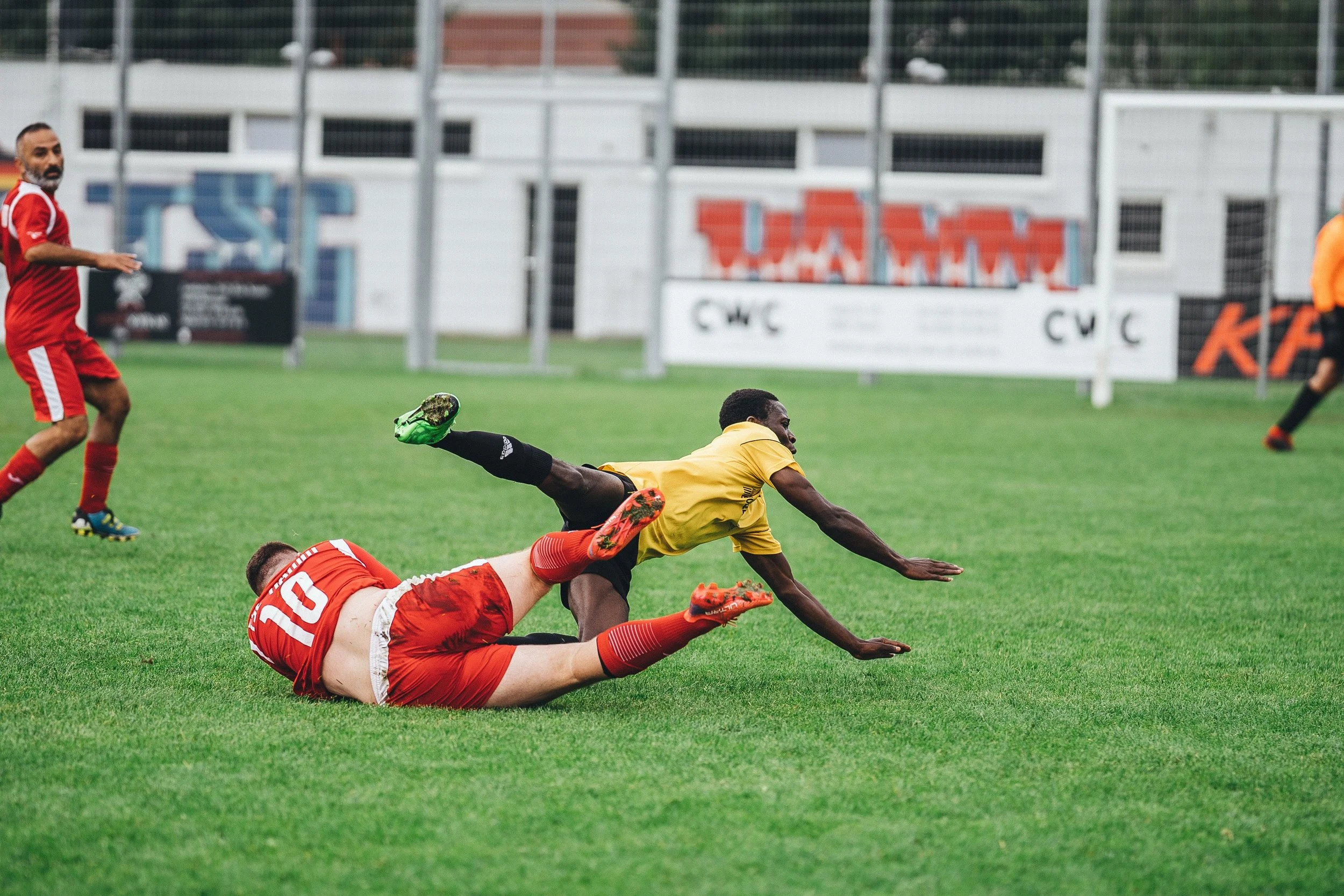
Here's the uncomfortable truth: that might have been a concussion. And the fact that you never lost consciousness doesn't rule it out.
Can You Have a Concussion Without Passing Out?
It's one of the most common, and most dangerous, assumptions people make about head injuries. Movies and TV shows love to show concussions as a dramatic knockout followed by someone waking up confused on the ground. So it's easy to assume that if you never went unconscious, you're in the clear.
The research says otherwise. A concussion is a type of traumatic brain injury caused by a bump, blow, or jolt to the head, or even a hit to the body forceful enough to make the head and brain move rapidly back and forth (Centers for Disease Control and Prevention [CDC], n.d.-a). That rapid movement can cause chemical changes in the brain, regardless of whether you ever lose consciousness.
In fact, losing consciousness is the exception, not the rule. Research on sports-related concussions estimates that fewer than 10% actually involve a loss of consciousness (Laker, 2011). The international medical consensus on sport-related concussion, developed by leading concussion researchers and clinicians, similarly does not require loss of consciousness as part of its clinical definition (Patricios et al., 2023). The vast majority of people who sustain a concussion stay conscious and responsive the entire time.
What Are the Signs and Symptoms of a Concussion?
If loss of consciousness isn't a reliable sign, what is? According to the CDC's HEADS UP program, concussion symptoms can affect how a person thinks, feels, acts, and sleeps, and can include (CDC, n.d.-b):
Headache or a feeling of pressure in the head
Confusion or difficulty concentrating
Balance problems or dizziness
Nausea or vomiting
Sensitivity to light or noise
Feeling sluggish, foggy, or "not quite right"
Memory problems, including trouble recalling events right before or after the injury
Changes in mood, behaviour, or personality
When Is a Head Injury an Emergency?
Most concussion symptoms can be assessed by a healthcare professional, but some symptoms after a head injury may signal a more serious brain injury. Seek emergency medical care if there is a worsening headache, repeated vomiting, a seizure, increasing confusion or unusual behaviour, slurred speech, weakness or numbness, decreased coordination, increasing drowsiness or difficulty waking, or unequal pupils/double vision.
Call 911 or go to the nearest emergency department if any of these danger signs occur after a head injury.
If you are unsure whether symptoms are an emergency, seek urgent medical advice rather than waiting for symptoms to worsen.

Notice what's missing from a required-symptom standpoint: passing out. Loss of consciousness is listed as just one possible sign among many, and the CDC specifically notes it can happen "even briefly," meaning even a few seconds counts, and even that brief version is still uncommon (CDC, n.d.-b).
This matters because symptoms don't always show up right away. Someone might feel okay in the moments right after a hit, only to develop a headache, fogginess, or irritability hours, evolve over the following minutes or hours (Patricios et al., 2023).
Why the “No Blackout” Concussion Myth Is Dangerous
This misconception isn't just a harmless misunderstanding; it has real consequences. When athletes, parents, coaches, or workers assume a concussion requires losing consciousness, injuries get missed. People return to sports, driving, or physically demanding jobs before their brain has actually recovered, which raises the risk of a second injury on top of one that hasn't healed yet.
It's also worth knowing that loss of consciousness, when it does happen, isn't a reliable stand-in for how serious a concussion is on its own. This is genuinely an area where research findings conflict: some studies have found no meaningful link between loss of consciousness and symptom severity or recovery time, while others have found that loss of consciousness, along with signs like amnesia or appearing dazed, was associated with greater cognitive deficits and longer recovery in their samples (Peltonen et al., 2020). Researchers themselves describe the overall picture as unresolved. What that means in practice is that clinicians don't rely on loss of consciousness alone to judge how serious an injury is, and neither should you.
What to Do If You Suspect a Concussion
1. Don't wait for a "big" symptom to take it seriously. You don't need to have passed out, thrown up, or been knocked flat to have a legitimate injury. A persistent headache, a foggy feeling, or just not feeling like yourself after a hit to the head or body is reason enough to get checked out.
2. Stop the activity. Whether it's a sport, a workout, or physical work, continuing to push through after a possible head injury increases the risk of a more serious injury, including the rare but serious risk of a second impact before the brain has recovered from the first.
3. Get evaluated by a healthcare provider. A concussion can't be diagnosed just by "how it looks" from the outside. A proper evaluation looks at symptoms, memory, balance, and cognitive function, not just whether someone was knocked out.
4. Track how you feel over the following days. Because symptoms can be delayed, it's worth paying attention not just right after the injury, but over the next 24-48 hours. Worsening symptoms, especially repeated vomiting, increasing confusion, or slurred speech, warrant immediate emergency care (CDC, n.d.-b).
5. Rest initially, then gradually return to activity. Current concussion guidance generally recommends relative rest during the first 24-48 hours rather than prolonged complete inactivity. Light daily activity, such as walking, can begin during this period if it does not worsen symptoms past a mild extent. After the first 24-48 hours, activity can gradually increase as tolerated and with guidance from a healthcare provider (Patricios et al., 2023).
For more information about what recovery can look like, read How Long Does It Take the Brain to Heal After a Concussion?
When Should You Seek a Concussion Evaluation?
A concussion doesn't have to knock you out to knock you off course. If something felt "off" after a hit to the head, even without a dramatic blackout moment, it's worth taking seriously and getting evaluated. Cognitive testing can also help identify whether a past head injury is still affecting memory, focus, or processing speed, even well after the initial symptoms seem to have faded.
References
Centers for Disease Control and Prevention. (n.d.-a). Concussion basics. HEADS UP. Retrieved August 2026, from https://www.cdc.gov/heads-up/about/index.html
Centers for Disease Control and Prevention. (n.d.-b). Signs and symptoms of concussion. HEADS UP. Retrieved August 2026, from https://www.cdc.gov/heads-up/signs-symptoms/index.html
Laker, S. R. (2011). Epidemiology of concussion and mild traumatic brain injury. PM&R, 3(10, Suppl. 2), S354–S358. https://doi.org/10.1016/j.pmrj.2011.07.017
McCrory, P., Meeuwisse, W., Dvořák, J., Aubry, M., Bailes, J., Broglio, S., Cantu, R. C., Cassidy, D., Echemendia, R. J., Castellani, R. J., Davis, G. A., Ellenbogen, R., Emery, C., Engebretsen, L., Feddermann-Demont, N., Giza, C. C., Guskiewicz, K. M., Herring, S., Iverson, G. L., … Vos, P. E. (2017). Consensus statement on concussion in sport—the 5th international conference on concussion in sport held in Berlin, October 2016. British Journal of Sports Medicine, 51(11), 838–847. https://doi.org/10.1136/bjsports-2017-097699
Peltonen, K., Launes, J., Koskinen, S., Vartiainen, M., Pajunen, S., Pertab, J., Laitala, T., & Hokkanen, L. (2020). On-field signs of concussion predict deficits in cognitive functioning: Loss of consciousness, amnesia, and vacant look. Translational Sports Medicine, 3(6), 565–573. https://doi.org/10.1002/tsm2.179
Patricios, J. S., Schneider, K. J., Dvorak, J., et al. (2023). Consensus statement on concussion in sport: the 6th International Conference on Concussion in Sport–Amsterdam, October 2022. British Journal of Sports Medicine, 57, 695–711. British Journal of Sports Medicine – Amsterdam 2022 Consensus
